Health Library / Heart
Heart checkup in Lucknow: ECG, echo or TMT — which one do you need?
· 6 min read · Lucknow
Heart disease arrives earlier in South Asians than in most populations, and often without the textbook warning signs. That makes cardiac testing a common referral — and the four common tests genuinely do different jobs.
Before any of it: crushing chest pain, pain spreading to the jaw or arm, breathlessness with sweating, or collapse is an emergency. Call for help and get to a hospital. Do not book a test and wait.
What each test actually looks at
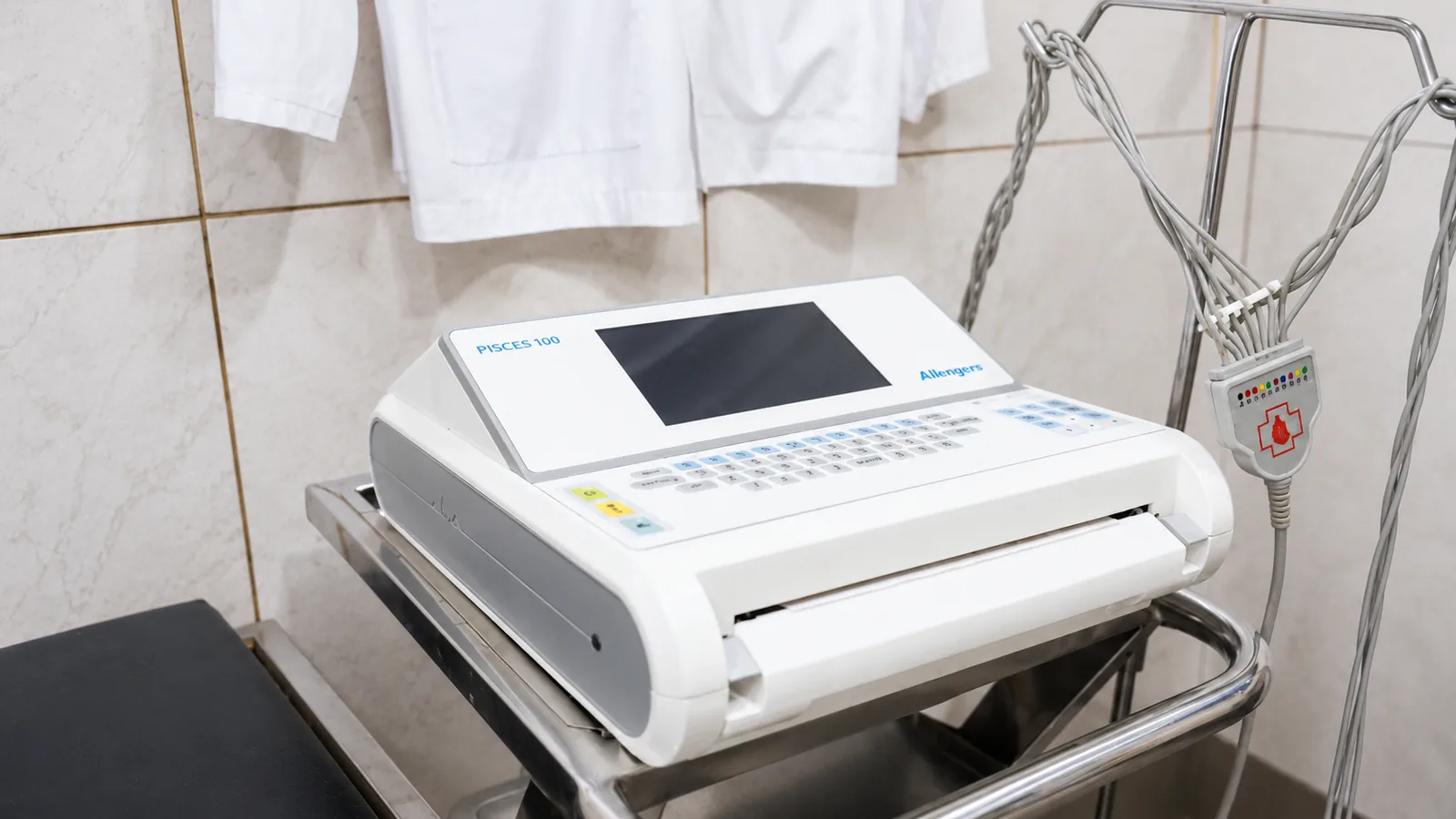
An ECG records the heart's electrical activity over a few seconds. It is quick, inexpensive, and shows rhythm problems, evidence of a previous heart attack and some acute changes — but a normal ECG at rest does not rule out coronary disease.
A 2D echocardiogram is an ultrasound of the heart. It shows structure and function: how well the muscle pumps, whether the valves are working, chamber sizes, and the pumping fraction your doctor may refer to as ejection fraction.
A TMT, or treadmill test, records an ECG while you walk on an inclined treadmill. The point is that some coronary narrowing only shows up when the heart is asked to work harder, which is exactly what a resting ECG cannot capture.
A Holter monitor is an ECG worn for twenty-four hours or longer. It is for symptoms that come and go — palpitations, unexplained dizziness or blackouts — which a twelve-second recording will almost always miss.
Which symptom points where
Your doctor decides, but this is roughly how the referrals map, and knowing it makes the conversation easier.
- Palpitations that come and go — Holter monitoring
- Breathlessness, swollen ankles, known or suspected valve disease — 2D echo
- Chest discomfort on exertion that settles with rest — usually TMT, after a resting ECG
- Routine screening from around forty, or before surgery — ECG, often with an echo depending on risk
- Leg pain on walking, or suspected clot — a vascular colour Doppler rather than a cardiac test
Preparing, and where a TMT differs
ECG and echo need no preparation. A TMT does: wear comfortable shoes and loose clothing, avoid a heavy meal for two to three hours beforehand, and ask your doctor about your medicines — beta blockers in particular are sometimes withheld before the test because they blunt the heart-rate response the test depends on. Do not stop any cardiac medicine on your own.
At Charak these sit alongside pathology and imaging in one building at Chowk, which is useful when a cardiac workup also wants a lipid profile, sugars and a chest X-ray on the same day.
This article is general health information, not a diagnosis or a treatment plan. Test results are read alongside your symptoms and history — please discuss yours with your doctor. See our disclaimer.