Health Library / Preventive health
Corporate health checkups in Lucknow: what to ask a diagnostic partner
· 5 min read · Lucknow
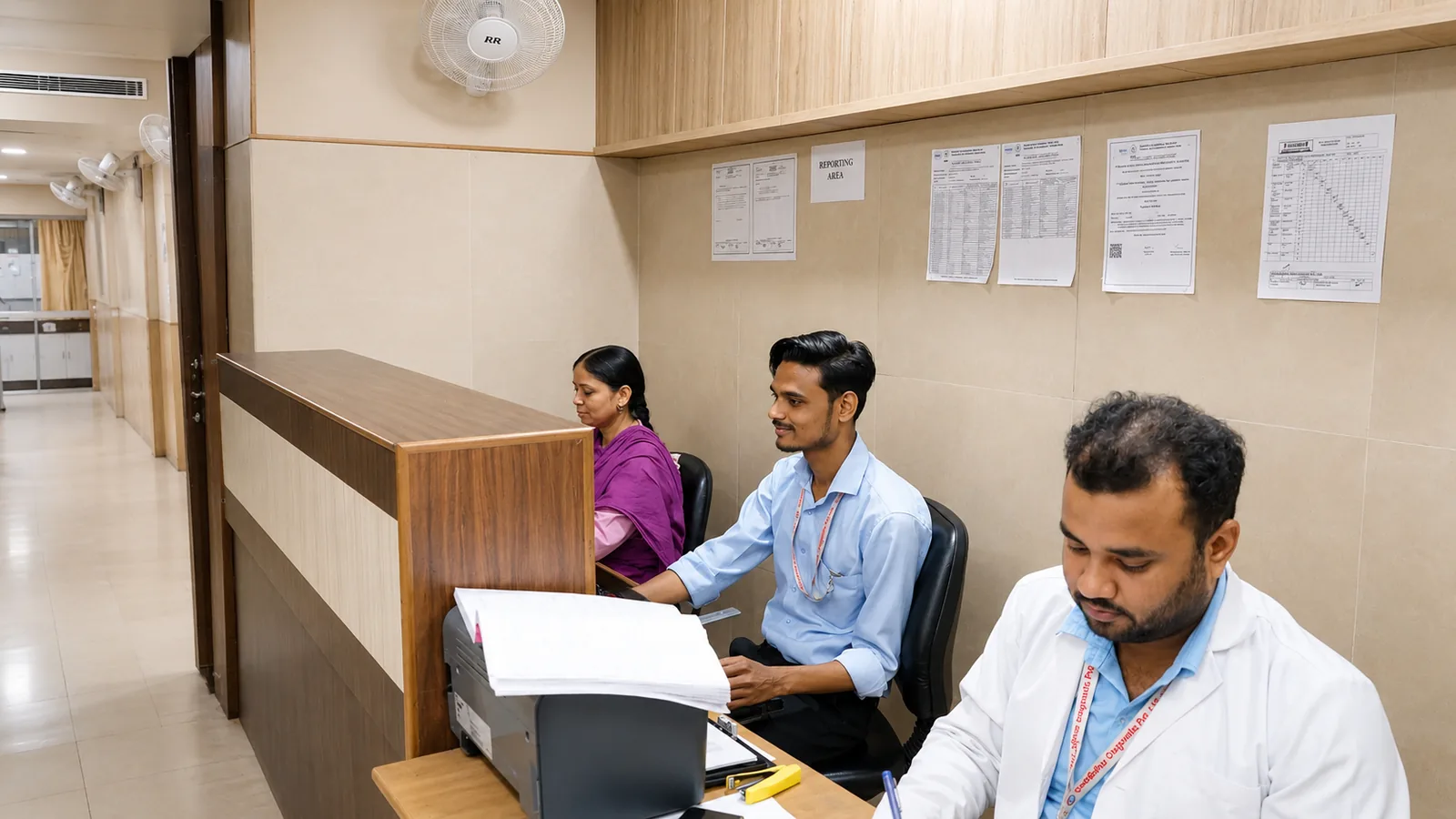
Annual employee health checks are now standard for most established employers in Lucknow, and the quality varies enormously. The failure mode is familiar: a long list of tests, a stack of reports nobody explains, and no measurable change a year later.
A programme worth running is judged on what happens after the reports, not on how many tests were on the list.
What belongs in the package
For a general adult workforce the core is the same as any sensible preventive panel: CBC, fasting glucose and HbA1c, lipid profile, liver and kidney function, TSH, urine routine, and — the parts most often skipped — blood pressure, height, weight and waist measurement.
Beyond that, tailor by role and age rather than by package tier. Employees over forty benefit from an ECG. Where roles carry specific exposures, the relevant checks matter far more than another blood panel: audiometry for high-noise environments, spirometry for dust or fumes, vision testing for drivers and screen-heavy roles.
Confidentiality is the part that gets it wrong
This deserves stating plainly because it is where corporate programmes most often overstep. An individual's results belong to that individual. What an employer should receive is aggregate, de-identified data — how many employees fall in a risk band, what the common findings are, what the programme should focus on next year.
An employer receiving named clinical results for its staff is not a reporting feature; it is a confidentiality failure, and it also destroys the programme, because employees who do not trust it stop participating honestly. Ask any prospective partner directly how individual reports are delivered and who else can see them.
- Individual reports go to the employee, confidentially and directly
- The employer receives aggregate, de-identified findings only
- Employees are told in advance what is tested and who sees what
- Participation and follow-up are supported rather than mandated through disclosure
On-site camps, or the centre?
On-site collection maximises participation, which is usually the deciding factor — an employee who has to take half a day off often simply does not go. Blood draws, basic measurements and ECG can be run on site with the right setup.
Anything imaging-based has to happen at the centre, so most workable programmes are a hybrid: a camp for the bloods and measurements, with scheduled centre visits for those whose results or roles require imaging. The other half is follow-through — someone explaining abnormal results and making sure they lead to a doctor, which is where a programme either earns its cost or does not.
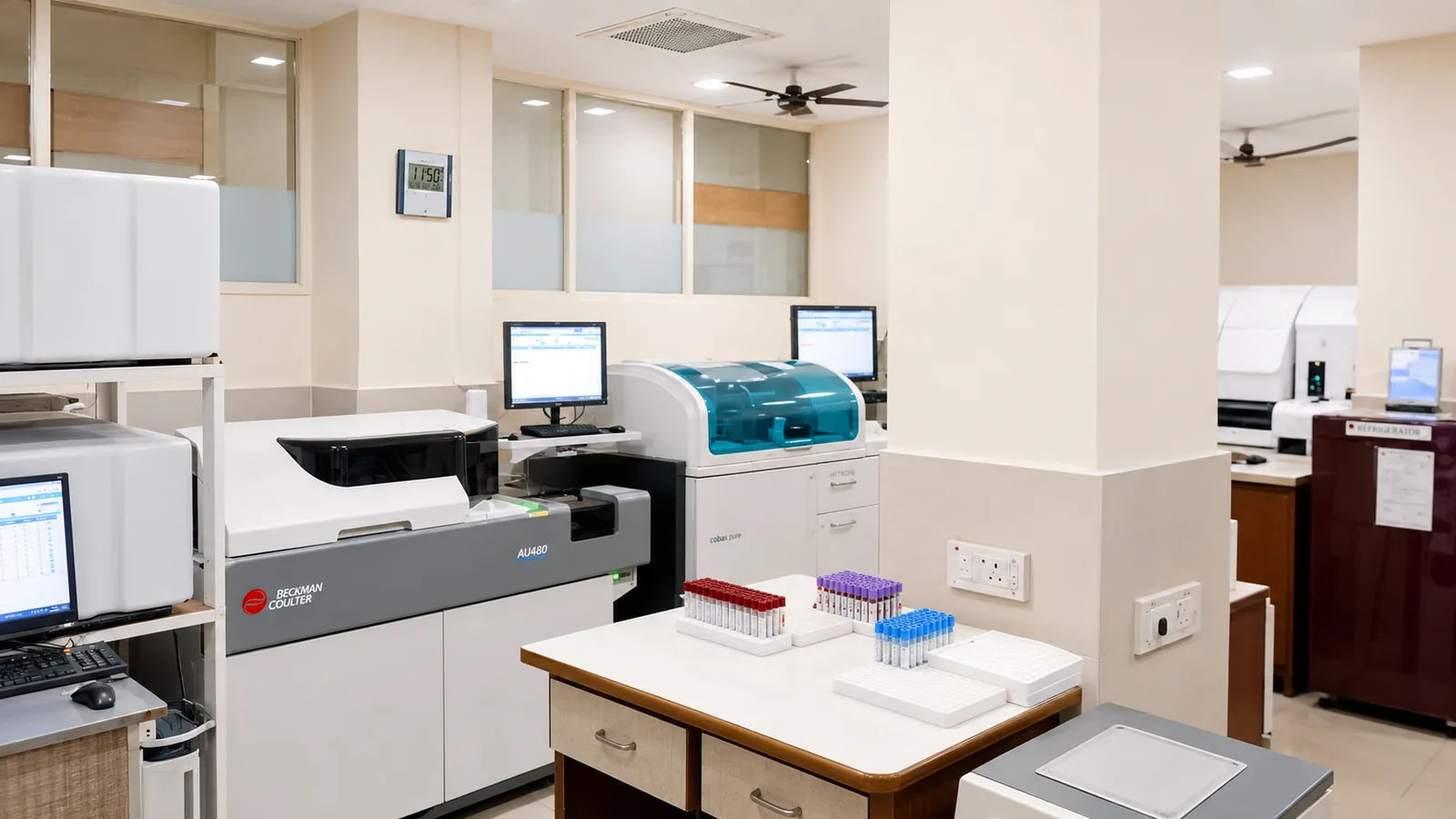
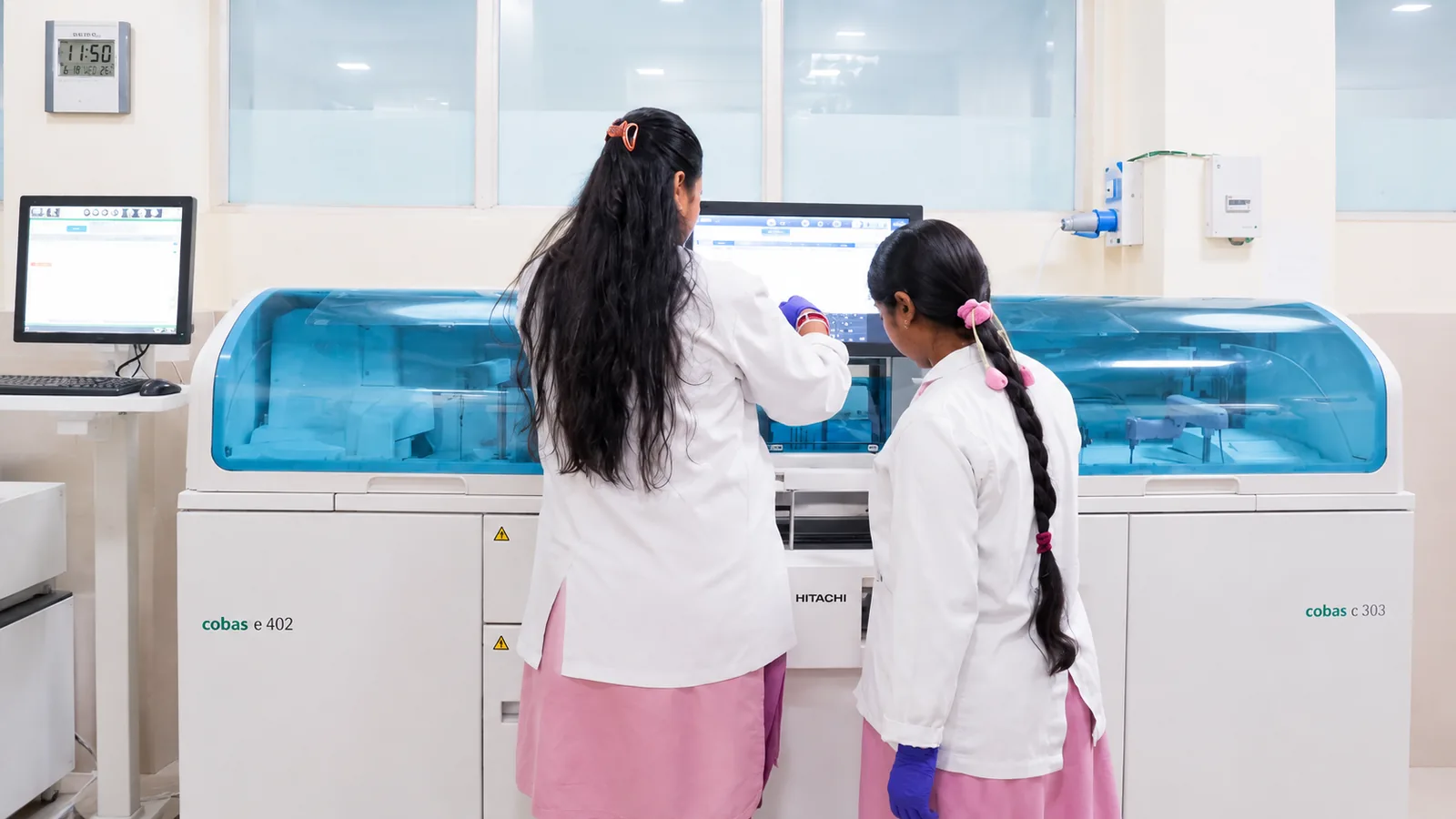
Charak runs corporate programmes from the centre at Chowk with the laboratory NABL-accredited against ISO 15189:2022, and handles on-site collection across Lucknow.
This article is general health information, not a diagnosis or a treatment plan. Test results are read alongside your symptoms and history — please discuss yours with your doctor. See our disclaimer.